












The Story of Cheyenne Bottoms and the Hunters Who Helped Preserve It
Long before it became one of North America's most celebrated waterfowl destinations, Cheyenne Bottoms was simply a place where birds gathered.
For thousands of years, they have.
Every spring and fall, ducks, geese, shorebirds, and cranes funnel through this vast Kansas marsh on their journey between the Canadian prairies and the Gulf Coast. Hunters know it today as one of the crown jewels of the Central Flyway, but its story began long before the first duck blind was ever built.
Cheyenne Bottoms isn't just another marsh. It's a reminder that the future of waterfowl hunting has always depended on protecting the places birds can't live without.
Before There Were Duck Camps
Long before Kansas became a state, Indigenous tribes traveled through Cheyenne Bottoms as part of seasonal hunting traditions.
The marsh offered everything migrating birds needed:
-
shallow water
-
abundant food
-
protection from predators
Which meant it offered everything hunters needed too.
For generations, waterfowl weren't hunted for sport. They were a source of food and survival. The rhythms of migration shaped life across the Great Plains long before maps ever labeled this place "Cheyenne Bottoms."
When the Rails Changed Everything
By the late 1800s, the railroad changed the relationship between people and waterfowl forever. As the Atchison, Topeka & Santa Fe and Missouri Pacific railroads expanded across Kansas, birds were no longer harvested only to feed nearby communities. Now they could be shipped hundreds of miles away.
Canvasbacks.
Redheads.
Mallards.
Geese.
Hunters packed birds in salt and ice before loading them onto refrigerated rail cars bound for markets in Kansas City, St. Louis, and beyond. The marsh became an industry. On good migration days, the harvest seemed endless. Until it wasn't.
The Birds Began to Disappear
The same store reigns true here, as it does everywhere. Waterfowl populations can’t withstand unlimited harvest. As bird numbers declined across North America, states began recognizing that something had to change.
Kansas responded in 1897 with some of its earliest game laws, banning commercial market hunting, restricting the shipment of wild game, and imposing penalties on railroads transporting birds out of season.
Those laws were strengthened again in 1901, 1903, and 1905 as conservation became more urgent. It marked a turning point. For perhaps the first time, protecting birds became just as important as pursuing them.

Building a Future for Hunters
By the middle of the twentieth century, conservation had shifted from limiting harvest to actively improving habitat.
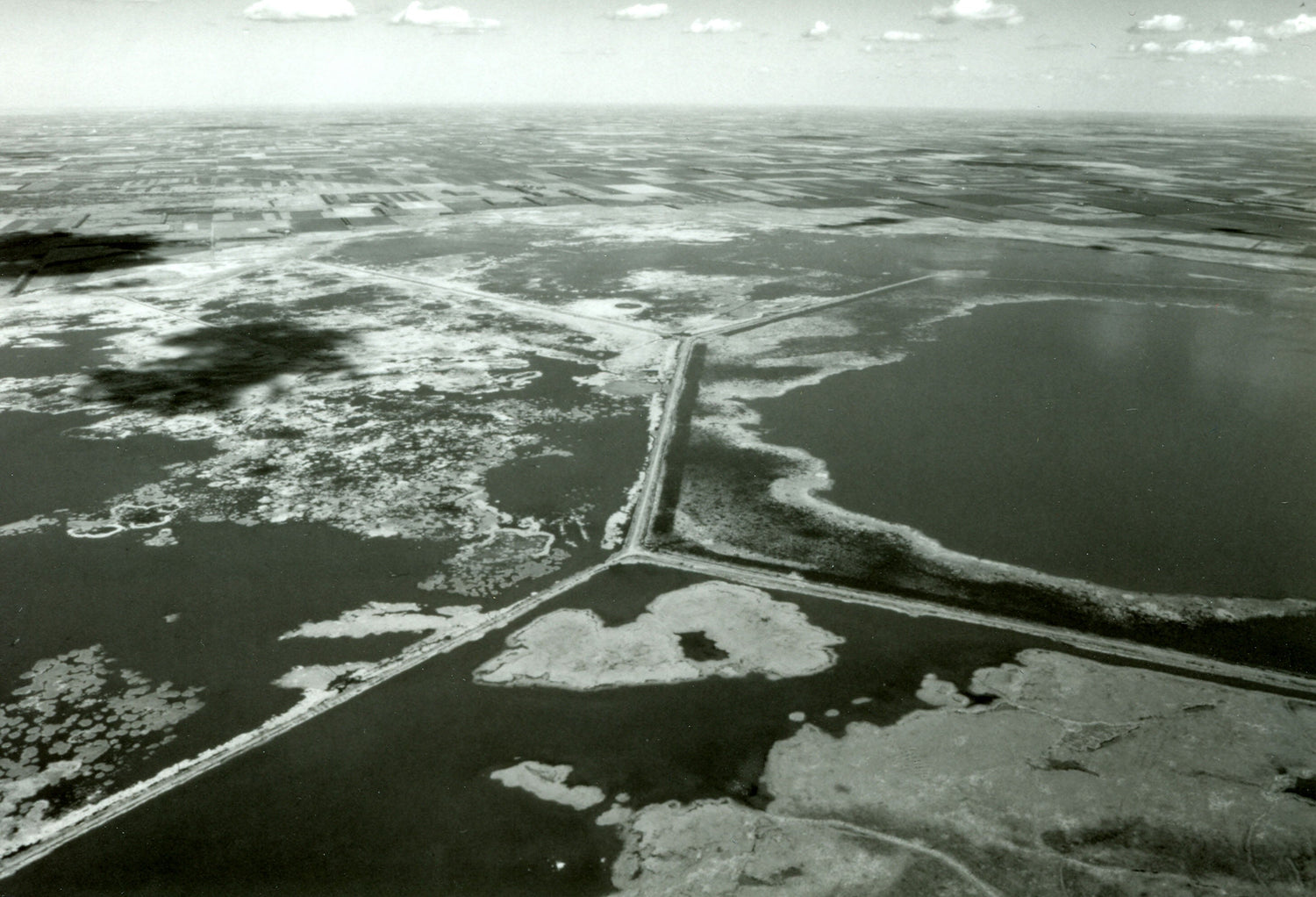
In 1952, funding from the Pittman-Robertson Act helped Kansas transform Cheyenne Bottoms into the managed wildlife area hunters know today.
Dikes were constructed.
Water-control structures were installed.
Roads were built.
Concrete hunting blinds appeared across the marsh.
For the first time, wildlife managers could actively control water levels, improving habitat for migrating birds while creating sustainable public hunting opportunities. More than seventy years later, many of those same blinds remain in use. Every fall, new generations of hunters carry decoys into marshes their grandfathers once hunted and hunt birds that have habitat because of some of these early actions in this historic area.

Conservation in Action
Many of the reasons Cheyenne Bottoms continues to produce exceptional hunting aren't simply because it’s a natural waterfowl hotspot.
It's because it's actively managed.
Today, biologists carefully monitor water conditions throughout the marsh, adjusting habitat for migrating waterfowl while protecting countless other species that depend on the wetlands. Sometimes that even means closing portions of the marsh when endangered birds like whooping cranes arrive. To some, that might seem like sacrificing hunting opportunities. In reality, it's the very thing that ensures hunting has a future. Healthy habitat creates healthy migrations. Healthy migrations create better hunting. The two have never been separate.
Why Cheyenne Bottoms Matters
Every fall, hundreds of thousands of birds descend on Cheyenne Bottoms. To most hunters, it's a legendary destination. To the birds, it's something even more important. It's a place to rest. To feed. To survive another thousand-mile journey. Without places like Cheyenne Bottoms, there is no Central Flyway. And without healthy flyways, there are no traditions to pass down.

More Than a Hunting Destination
It's easy to think of Cheyenne Bottoms as another place to chase mallards. But spend enough mornings there and you realize it's something bigger. You're standing in one of the last great marshes of the American interior. A place where generations of hunters have watched the same migration unfold. Where conservation and hunting have grown side by side for more than a century. And where every flock dropping into the decoys is carrying the story of every place it has already been.

Cheyenne Bottoms exists as we know it today because generations of hunters chose to become stewards as well as sportsmen. Through hunting license dollars, Pittman-Robertson excise taxes on firearms and ammunition, volunteer organizations, and countless hours spent restoring habitat, hunters have helped ensure this marsh remains a sanctuary for wildlife. The story of Cheyenne Bottoms isn't just about migrating birds, it's about the people who recognized that protecting wild places was the only way to preserve the traditions they loved.