











The last flicker of headlamps in the distance began to fade as faint whistles and wingbeats drifted overhead. In the moments before sunrise, a calm stillness settled over Cheyenne Bottoms. An earthy mixture of mud, prairie grasses and slough water wafted through the cool morning breeze as the marsh stirred to life. I eagerly leaned toward Sunka, my black Labrador Retriever, and sent a few soft notes from my duck call into the darkness.
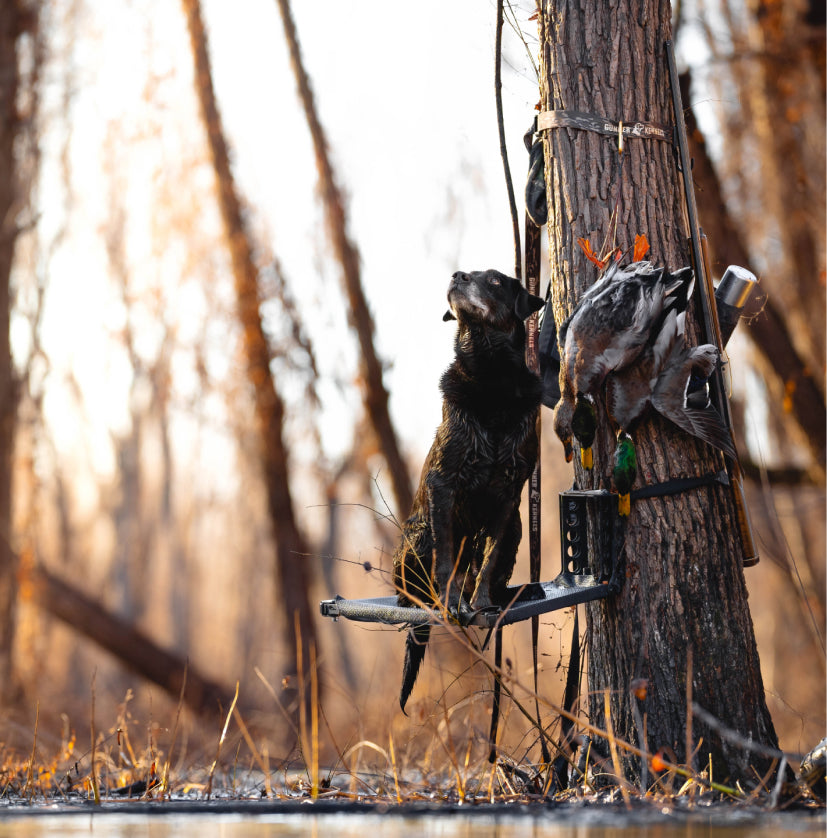
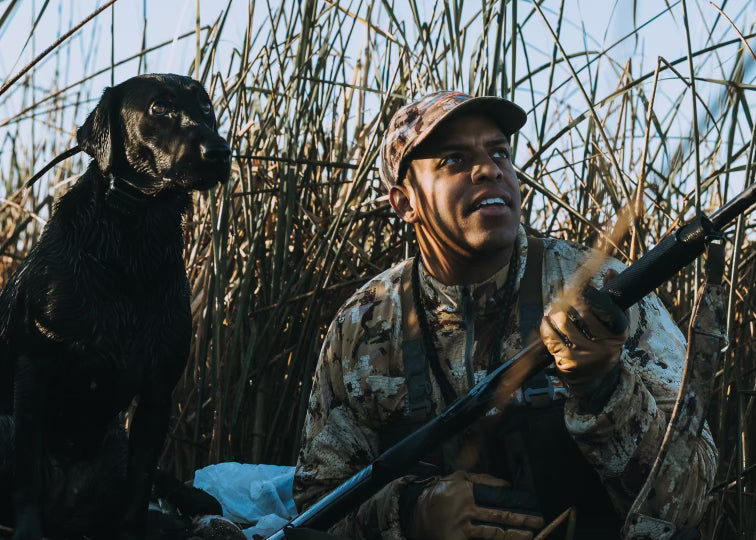
She sat motionless atop her elevated stand; her amber eyes fixed intently on the horizon. Although only 3 years old, she had spent many early mornings at my side chasing ducks and geese across the Central Flyway. To her, this was just another morning together, but to me it was our first experience hunting at Cheyenne Bottoms. As we sat and watched the first few groups of teal speed past our decoys, I placed my arm around her and smiled. That morning, we wrote the first chapter of our story at Cheyenne Bottoms.

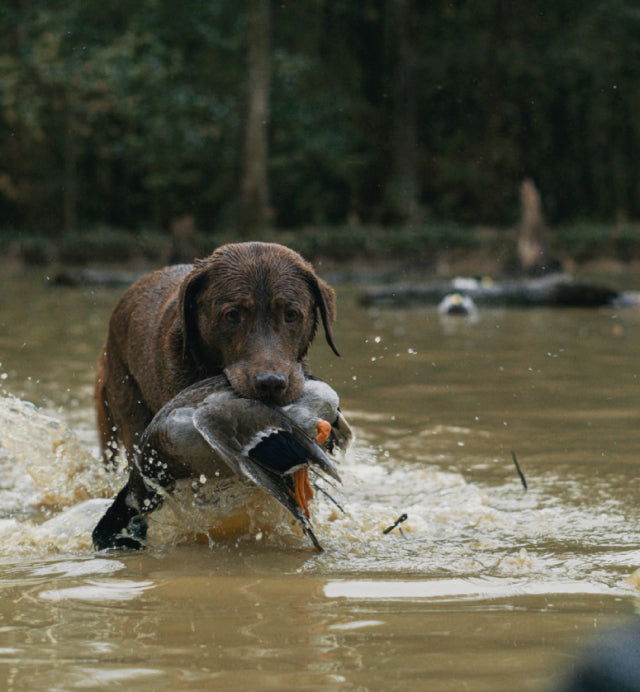
Sunka and I were tucked close to a patch of flooded grass as chaos began to erupt across the marsh. Groups of ducks scattered in all directions, dark shadows amid the orange and yellow skyline trying to evade gunfire. As the first flock of the morning flew toward my spread, I raised my gun and shot. Sunka’s ears were perked and her head pointed straight toward a bird on the water – she had marked the fall. I called her name with excitement to send her on the retrieve; she jumped from her stand and bounded effortlessly through the water to the downed bird. On her return, she leaped back onto the stand with the bird held softly in her mouth, made a quick turn, and readied herself for the next flock.
As the sun continued to rise, the vast wetland was revealed to me. A tapestry of riparian areas, shelterbelts, and prairie marshes stretched toward an endless horizon. The smell of gun smoke filled the air as I looked out to see boat blinds, panel blinds, and spinning wing decoys in every direction. The sky was filled with birds of all sorts – ducks, geese, pelicans, and shorebirds, each finding refuge in this expansive basin during the fall migration. The abundance of wildlife instilled the importance of this ecosystem in me. There I sat with Sunka, envisioning all the memories we would have amid the chaos of waterfowl hunting at Cheyenne Bottoms.
Sunka only lived to see one season at Cheyenne Bottoms. An abscess turned septic and took her too soon from me. As I worked through grief, I realized that struggle and loss were woven into the history of Cheyenne Bottoms. The marsh was born from immense environmental forces that created the great land sink and for centuries Native American tribes waged battles over its abundant resources. As Kansas was pioneered, market hunters, land developers, and conservationists fought over control, but ultimately the State of Kansas legislated its protection. Through a millennium of conflict, Cheyenne Bottoms witnessed tragedy, but persevered – providing sanctuary to wildlife each season.
The beauty of that single morning replayed in my mind many times – I missed the smell of a wet dog and wet feathers and yearned for another sunrise over that majestic Kansas marsh. Like the migration each year, I returned the next fall with a small black Lab puppy named Kohtop to continue the legacy of Cheyenne Bottoms. The first year was a learning experience for both of us; she struggled to swim among the flooded grasses and moved constantly on her elevated stand, but I saw glimpses of her future when a flock of ducks passed by. Her ears perked and her amber eyes followed their flight path.

In our fourth year together, Kohtop and I traveled to Cheyenne Bottoms and sat in the same spot where Sunka and I sat all those years ago. As the sun rose, a flock of teal flew past our decoys. I shot and clipped the wing of a bird, but it sailed a few hundred yards into an open spot in the marsh. Although it was barely visible, Kohtop was locked on its location. With the wind and the waves, the duck was quickly floating away. I excitedly called her name, and Kohtop took off. She bounded through the shallow water and swam through the deep spots, but the bird was showing some signs of life and began swimming. I picked up my whistle and blew it. She stopped, sat in the water, and looked at me. I gave her a signal to move back right and cut off its path. She turned hard and ran through the shallow water, closing the distance, but the duck turned back left, just outside a patch of reeds. I again blew my whistle and made a back left cast. Kohtop picked up speed and reached for the bird right as it went under water. She looked around and then looked up at me right as the bird reappeared. Quickly, she grabbed the bird and made the long march back to me.

Each fall when I return to the marsh, I feel both dogs beside me – their spirits are intertwined in my heart. The same aromas of mud, grasses, and wet feathers waft through the air. The whistles and wingbeats still drift overhead. Cheyenne Bottoms holds onto memories as a way of drawing me back – the steadiness of an experienced duck dog or the splashes of a young retriever. To me, Cheyenne Bottoms is everything I could want it to be, and all that I could wish for. Long after our time ends, Cheyenne Bottoms will continue welcoming the fall migration and quietly writing the first chapters of stories yet to be told.
Personal Essay by Douglas Spale